邻接表法

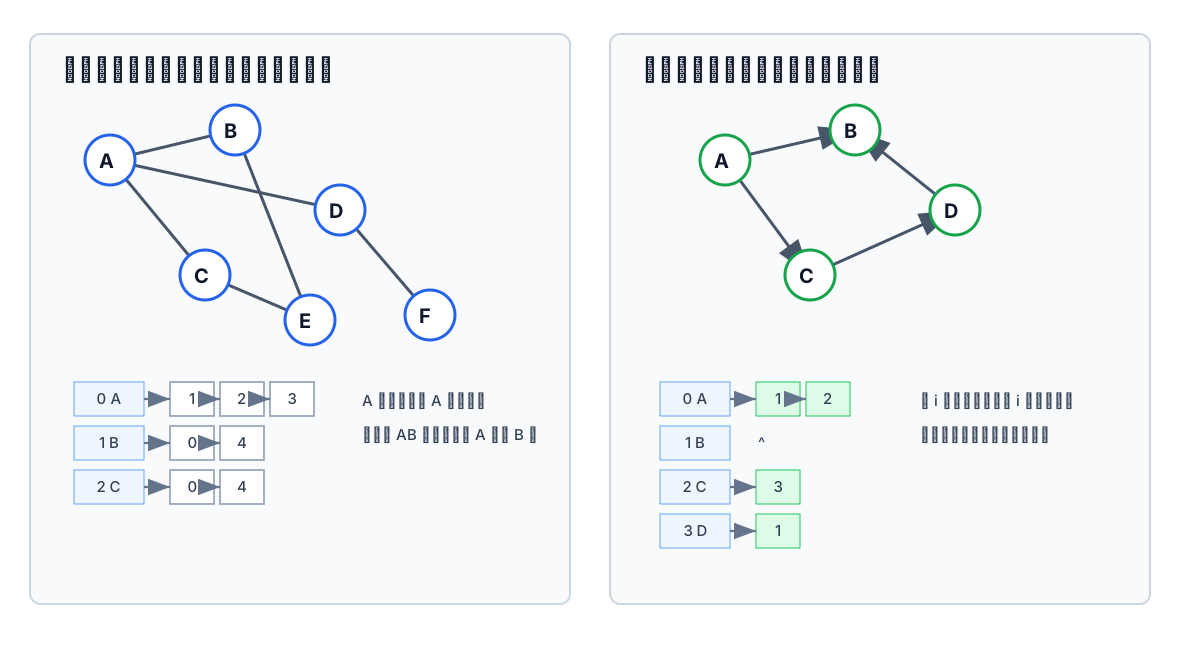
邻接表法用一个顶点表保存所有顶点,再给每个顶点接一条链表,链表中保存与该顶点直接相关的边或弧。它本质上是顺序存储 + 链式存储:顶点表适合按编号定位顶点,边结点链表只保存实际存在的边或弧。

邻接表总览

为什么需要邻接表

邻接矩阵必须开 $|V|\times |V|$ 个单元。若图很稀疏,大量位置只是表示“没有边”,空间浪费明显。

邻接表只保存实际存在的边或弧,因此更适合稀疏图

存储结构

邻接表一般由两类结点组成:

结点 保存内容 作用
顶点表结点 顶点数据 data,第一条边或弧的指针 firstArc 顺序存储所有顶点,支持按编号访问
边/弧结点 邻接点编号 adjvex,下一条边或弧的指针 next,可选权值 weight 链式保存某个顶点的邻接关系
1
2
3
4
5
6
7
8
9
10
11
12
13
14
15
16
17
18
19
20
21
22
23
24
#include <stdbool.h>

#define MAX_VERTEX_NUM 100

typedef char VertexType;
typedef int EdgeType;

typedef struct ArcNode {
int adjvex; // 邻接点下标:若本结点挂在 u 的链表中,则表示 u -> adjvex
EdgeType weight; // 边或弧的权值;无权图可统一记为 1
struct ArcNode *next; // 指向同一个顶点链表中的下一条边或弧
} ArcNode;

typedef struct VertexNode {
VertexType data; // 顶点本身的信息,例如顶点名 A、B、C
ArcNode *firstArc; // 链表头指针,指向该顶点的第一条边或弧
} VertexNode;

typedef struct {
VertexNode vertices[MAX_VERTEX_NUM]; // 顶点表:顺序存储所有顶点
int vertexCount; // 顶点数,遍历顶点表时使用
int edgeCount; // 边或弧的数量;无向边仍按一条边统计
bool directed; // true 表示有向图;false 表示无向图
} ALGraph;
和树的孩子表示法的关系

树的孩子表示法也是“顺序表 + 链表”:顺序表保存每个结点,链表保存该结点的孩子。邻接表把这个思想推广到图:顶点表保存顶点,每条链表保存该顶点的邻接点。

## 无向图邻接表

无向边 $(u,v)$ 与两个顶点都相关,所以要存两次:

  • 在 $u$ 的链表中加入 $v$。
  • 在 $v$ 的链表中加入 $u$。

因此无向图中边结点数量是 $2|E|$,整体空间复杂度为:

$$
O(|V|+2|E|)
$$

在无向图邻接表中,顶点 $v_i$ 的度就是第 $i$ 条链表中的边结点个数。

有向图邻接表

有向图的邻接表通常保存出边表。若存在弧 $\langle u,v\rangle$,只在 $u$ 的链表中加入 $v$。

因此有向图中弧结点数量是 $|E|$,整体空间复杂度为:

$$
O(|V|+|E|)
$$

对有向图:

  • 出度:直接数该顶点链表中的弧结点个数,很方便。
  • 入度:需要扫描所有顶点的链表,统计哪些弧结点的 adjvex 指向该顶点,不方便。
  • 总度:入度 + 出度。

若题目需要频繁找入边,可以使用逆邻接表或后续的十字链表。

表示方式不唯一

只要顶点编号确定,同一个图的邻接矩阵表示是唯一的;但邻接表表示不唯一。

原因是:同一个顶点的邻接点可以按不同顺序链接。例如 A 的邻接点可以写成:

1
A -> B -> C -> D

也可以写成:

1
A -> D -> C -> B

两者表示的是同一个图,只是链表结点顺序不同。遍历算法若基于邻接表,遍历序列也可能受链表顺序影响。

基本操作

1
2
3
4
5
6
7
8
9
10
11
12
13
14
15
16
17
18
19
20
21
22
23
24
25
26
27
28
29
30
31
32
33
34
35
36
37
38
39
40
41
42
43
44
45
46
47
48
49
50
51
52
53
54
55
56
57
58
59
60
61
62
63
64
65
66
67
68
69
70
71
72
73
74
75
76
77
78
79
80
81
82
83
84
85
86
87
88
89
90
91
92
93
94
95
96
97
98
99
100
101
102
103
104
105
106
107
108
109
110
111
112
113
114
#include <stdbool.h>
#include <stdlib.h>

// Returns whether `from` has a direct edge or arc to `to`.
//
// Args:
// graph: adjacency-list graph to query.
// from: start vertex index.
// to: end vertex index.
//
// Returns:
// true if `to` appears in `from`'s adjacency list; false otherwise.
bool Adjacent(const ALGraph *graph, int from, int to) {
// 邻接表不能像邻接矩阵那样 O(1) 定位 edge[from][to]。
// 必须沿 from 的链表查找,看是否存在邻接点 to。
for (ArcNode *arc = graph->vertices[from].firstArc; arc != NULL; arc = arc->next) {
if (arc->adjvex == to) {
return true;
}
}

return false;
}

// Inserts one arc node into `from`'s adjacency list.
//
// Args:
// graph: adjacency-list graph to modify.
// from: start vertex index; the new node is inserted into this list.
// to: end vertex index; stored as the new node's adjvex.
// weight: edge or arc weight.
//
// Side effects:
// Allocates one ArcNode and inserts it at the head of `from`'s list.
void AddArc(ALGraph *graph, int from, int to, int weight) {
ArcNode *arc = malloc(sizeof(ArcNode));
if (arc == NULL) {
return;
}
arc->adjvex = to;
arc->weight = weight;

// 头插法的关键两步不能颠倒:
// 先让新结点指向原来的第一个结点,再把头指针改为新结点。
arc->next = graph->vertices[from].firstArc;
graph->vertices[from].firstArc = arc;
}

// Adds one edge or arc.
//
// Args:
// graph: adjacency-list graph to modify.
// from: start vertex index.
// to: end vertex index.
// weight: edge or arc weight.
//
// Side effects:
// For a directed graph, inserts only <from, to>. For an undirected graph,
// inserts both from -> to and to -> from.
void AddEdge(ALGraph *graph, int from, int to, int weight) {
// 有向图中,这一句插入弧 <from, to>。
AddArc(graph, from, to, weight);

if (!graph->directed) {
// 无向边 (from, to) 要在两个端点的链表中各存一次。
AddArc(graph, to, from, weight);
}

++graph->edgeCount;
}
// Returns the out-degree of `vertex`.
//
// Args:
// graph: adjacency-list graph to query.
// vertex: vertex index.
//
// Returns:
// Length of `vertex`'s adjacency list. For an undirected graph, this is the
// ordinary degree.
int OutDegree(const ALGraph *graph, int vertex) {
int degree = 0;

// 有向图默认保存出边表,所以 vertex 链表的长度就是出度。
// 无向图中同理,该链表长度就是 vertex 的度。
for (ArcNode *arc = graph->vertices[vertex].firstArc; arc != NULL; arc = arc->next) {
++degree;
}

return degree;
}

// Returns the in-degree of `vertex`.
//
// Args:
// graph: adjacency-list graph to query.
// vertex: vertex index.
//
// Returns:
// Number of arc nodes in the whole graph whose adjvex equals `vertex`.
int InDegree(const ALGraph *graph, int vertex) {
int degree = 0;

// 入边不在 vertex 自己的链表中,而是散落在其他顶点的出边表里。
// 因此必须扫描整个邻接表,统计哪些弧的终点是 vertex。
for (int i = 0; i < graph->vertexCount; ++i) {
for (ArcNode *arc = graph->vertices[i].firstArc; arc != NULL; arc = arc->next) {
if (arc->adjvex == vertex) {
++degree;
}
}
}

return degree;
}
头插法会改变邻接点顺序

上面的 AddArc 使用头插法,代码简单,但同一顶点的邻接点顺序与边输入顺序相反。若题目要求按输入顺序访问邻接点,应使用尾插法:

1
2
3
4
5
6
7
8
9
10
11
12
13
14
15
16
17
18
19
20
21
22
23
24
25
26
27
28
29
30
31
32
33
34
35
36
37
// Inserts one arc node at the tail, using ordinary pointers.
//
// Args:
// graph: adjacency-list graph to modify.
// from: start vertex index; the new node is inserted into this list.
// to: end vertex index; stored as the new node's adjvex.
// weight: edge or arc weight.
//
// Side effects:
// Appends one ArcNode. This preserves the input order of adjacent vertices.
void AddArc(ALGraph *graph, int from, int to, int weight) {
ArcNode *arc = malloc(sizeof(ArcNode));
if (arc == NULL) {
return;
}
arc->adjvex = to;
arc->weight = weight;
arc->next = NULL;

// 需要判断链表是否为空
if (graph->vertices[from].firstArc == NULL) {
// 空链表没有尾结点,直接修改头指针。
graph->vertices[from].firstArc = arc;
return;
}

ArcNode *tail = graph->vertices[from].firstArc;

// tail 是普通结点指针,所以它停在“最后一个结点”上。
while (tail->next != NULL) {
tail = tail->next;
}

// 找到最后一个结点后,修改它的 next。
tail->next = arc;
}

若题目要求按顶点编号访问邻接点,则应插入后排序或按序插入。

与邻接矩阵对比

对比项 邻接表 邻接矩阵
空间复杂度 无向图 $O(|V|+2|E|)$;有向图 $O(|V|+|E|)$ $O(|V|^2)$
适合图类型 稀疏图 稠密图
表示方式 不唯一 顶点编号确定后唯一
判断两点是否相邻 扫描对应链表,最坏 $O(|V|)$ $O(1)$
找某顶点的邻接点 直接遍历该顶点链表 扫描对应行或列
无向图求度 数该顶点链表结点,方便 扫描对应行或列
有向图求出度 数该顶点链表结点,方便 扫描对应行
有向图求入度 扫描整个邻接表,不方便 扫描对应列
找有向图出边 遍历该顶点链表,方便 扫描对应行
找有向图入边 扫描整个邻接表,不方便 扫描对应列