1. 什么是状态模式 状态模式(State Pattern)是一种行为型设计模式,它允许对象在其内部状态改变时改变其行为。状态模式将对象的状态封装成独立的类,使客户端可以透明地切换对象的状态。
为了方便理解,这里引入有限状态机(Finite State Machine)的概念。
1.1 有限状态机 有限状态机(Finite State Machine,FSM)是一个数学模型,它包含一组有限的状态、一组输入事件、一个初始状态以及一个状态转移函数。FSM 在任何给定时间点都处于其中一个状态。当接收到输入事件时,它会根据状态转移函数转换到新的状态。
状态模式可以看作是 FSM 的一种面向对象实现。
2. 为什么需要状态模式 当一个对象的行为取决于它的状态,并且它必须在运行时根据状态改变行为时,可以使用状态模式。状态模式可以将与特定状态相关的行为局部化,并且使得状态转换显式化。
3. 状态模式的实现(go) 让我们以一个自动售货机为例。售货机有以下几种状态:
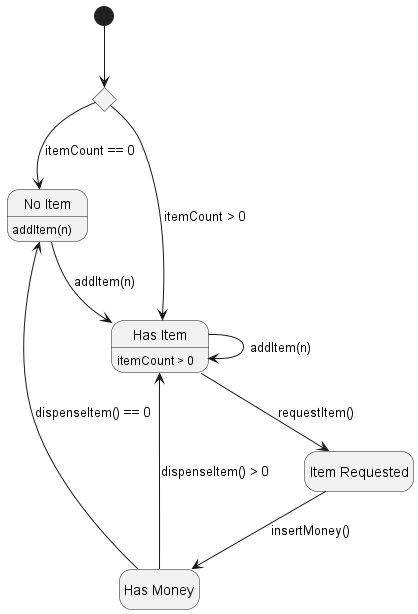
hasItem: 有商品状态noItem: 无商品状态itemRequested: 商品请求状态hasMoney: 已投币状态
状态转移如下:
hasItem -> itemRequested:requestItem()itemRequested -> hasMoney:insertMoney()hasMoney -> hasItem:dispenseItem()>0hasMoney -> noItem:dispenseItem()==0 NoItem -> hasItem:addItem(n)HasItem -> HasItem:addItem(n)
1
2
3
4
5
6
7
8
9
10
11
12
13
14
15
16
17
18
19
20
21
22
23
24
25
26
27
28
29
30
31
32
33
34
35
36
37
38
39
40
41
42
43
44
45
46
47
48
49
50
51
52
53
54
55
56
57
58
59
60
61
62
63
64
65
66
67
68
69
70
71
72
73
74
75
76
77
78
79
80
81
82
83
84
85
86
87
88
89
90
91
92
93
94
95
96
97
98
99
100
101
102
103
104
105
106
107
108
109
110
111
112
113
114
115
116
117
118
119
package vendingimport "fmt" type state interface { requestItem() error insertMoney() error dispenseItem() int addItem(n int ) int } type context struct { s *state count int } func NewContext (itemCount int ) var s state if itemCount > 0 { s = &hasItemState{} } else { s = &noItemState{} } c := &context{s: s, count: itemCount} initAllStates(c) return c } var ( hasItem *hasItemState noItem *noItemState itemRequested *itemRequestedState hasMoney *hasMoneyState ) func initAllStates (c *context) hasItem = &hasItemState{c: c} noItem = &noItemState{c: c} itemRequested = &itemRequestedState{c: c} hasMoney = &hasMoneyState{c: c} } func (c *context) error { return c.s.requestItem(c) }func (c *context) error { return c.s.insertMoney(c) }func (c *context) error { if c.s.dispenseItem() == 0 { return fmt.Errorf("can't dispense" ) } return nil } func (c *context) int ) error { if c.s.addItem(n) == 0 { return fmt.Errorf("can't add item" ) } return nil } func (c *context) func (c *context) int { return c.count }type noItemState struct {c *context}func (st *noItemState) error { return fmt.Errorf("no item" ) }func (st *noItemState) error { return fmt.Errorf("no item" ) }func (st *noItemState) int { return 0 }func (st *noItemState) int ) int { st.c.count += n c.setState(hasItem) return st.c.count } type hasItemState struct {c *context}func (st *hasItemState) error { c.setState(itemRequested) return nil } func (st *hasItemState) error { return fmt.Errorf("request first" ) }func (st *hasItemState) int { return 0 }func (st *hasItemState) int ) int { st.c.count+=n; return st.c.count } type itemRequestedState struct {c *context}func (st *itemRequestedState) error { return fmt.Errorf("already requested" ) }func (st *itemRequestedState) error { c.setState(hasMoney) return nil } func (st *itemRequestedState) int { return fmt.Errorf("insert first" ) }func (st *itemRequestedState) int ) int { st.c.count+=n; return st.c.count } type hasMoneyState struct {c *context}func (st *hasMoneyState) error { return fmt.Errorf("already requested" ) }func (st *hasMoneyState) error { return fmt.Errorf("already has money" ) }func (st *hasMoneyState) int { st.c.count-- if st.c.count > 0 { c.setState(hasItem) } else { c.setState(noItem) } return st.c.count } func (st *hasMoneyState) int ) int { return 0 }
客户端
1
2
3
4
5
6
7
8
9
10
11
12
13
14
15
16
17
18
19
20
21
22
23
24
25
26
27
28
29
30
31
package mainimport ( "fmt" "log" "vending" ) func main () c := vending.NewContext(10 ) fmt.Println("count:" , c.ShowCount()) err := c.RequestItem() if err != nil { log.Fatal(err) } err = c.InsertMoney() if err != nil { log.Fatal(err) } err = c.DispenseItem() if err != nil { log.Fatal(err) } fmt.Println("count:" , c.ShowCount()) err = c.AddItem(5 ) if err != nil { log.Fatal(err) } fmt.Println("count:" , c.ShowCount()) }
输出:
1
2
3
count: 10 count: 9 count: 14
FSM 图如下:
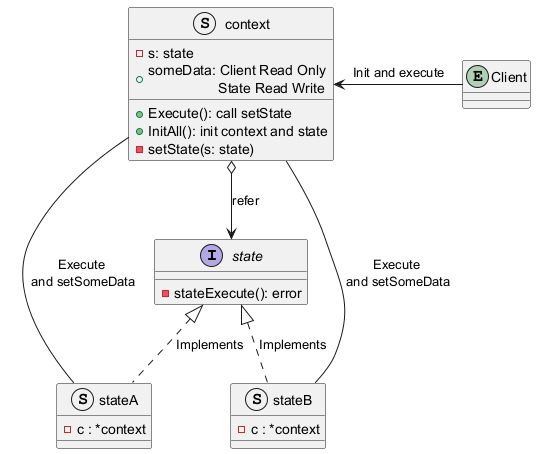
类图